Hit and runs are terrifyingly common in Ontario. We regularly see pedestrians and people on bikes hit by motorists who flee the scene. The injuries in many cases are quite serious and life changing.
Not to fear though, should you be involved in a hit and run, you have options. If you are involved in a hit and run and injured as a result, you can still access no fault Accident Benefits for rehab benefits, lost income, medical expenses and more. You can also still bring a lawsuit, regardless of if the driver is ever apprehended.
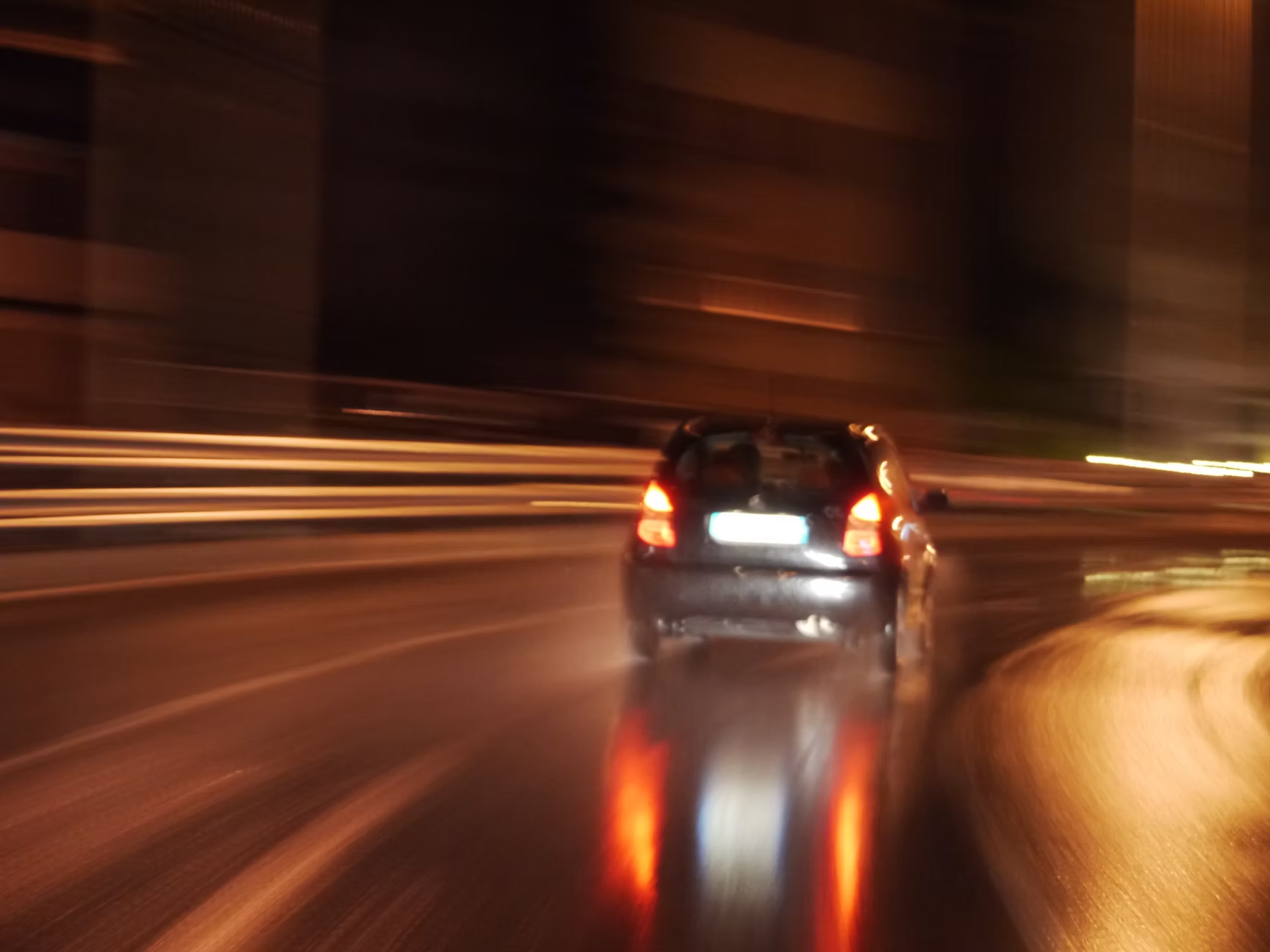
A client of ours suffered serious injuries after a car blew through a red light, crashed into him, and sped off into the night. Even though the driver is gone, we are able to help him get compensation.
A main concern for people involved in a hit and run is that without knowing who the driver is, you can’t access supports through their insurer.
In Ontario, if you’re involved in any type of motor collision (hit and run, dooring, fail to stop, etc.) you access Accident Benefits and sue the at fault party.
Accident Benefits provide immediate supports as noted above. Interestingly, you have to apply through your own auto insurer for ABs.
If you don’t have auto insurance but are on a parent’s, spouse’s or employer’s auto insurance policy you have to apply to that insurer.
If you have no associated auto insurance, you’re not out of luck. You can access the Ontario:
MOTOR VEHICLE ACCIDENT CLAIMS FUND
The Motor Vehicle Accident Claims Fund (“MVACF”) is the payer of last resort and provides the same Accident Benefits. A saving grace for hit and run victims.
The MVACF engages when a driver is driving without insurance or flees the scene and cannot be identified. Injured cyclists (and pedestrians), can apply to the MVACF for immediate Accident Benefits coverage, such as health care costs, lost wages, in home care, etc.
To access the MVACF you must within 24 hours of the hit and run:
1) report the crash to police; and
2) seek medical attention.
Even if the driver flees the scene you can still bring a lawsuit!
Suing for damages sustained in a motor vehice collision is necessary when you have serious long term injuries that require more financial support than Accident Benefits provide and you have permanent injuries. Lawsuits compensate you for pain and suffering, lost income/job opportunities, long term care needs, impacts on family, etc. They are critically important to many crash victims.
Even if the driver fled and you don’t have their name or insurance you can actually sue (with no penalty) your own auto insurer. This is because every person with auto insurance in Ontario has mandatory OCPF-44R underinsured and uninsured coverage included in their auto insurance.
This insurance kicks in when someone hits you who doesn’t have enough insurance to cover your losses or, you guessed it, when that person just flees the scene. In this case, you sue your own insurer the exact same way you would sue the driver.
But what if you don’t have car insurance?
Similarly to how the Accident Benefits are paid by the Motor Vehicle Accident Claims Fund, you can sue the MVACF for your damages. Just like you would sue the driver who hit you.
But unlike the driver’s auto insurance policy or your own, which are usually in the $1,000,000.00 range*, the max you can sue the fund for is $200,000.00.
(*We recommend everyone ask their broker or insurance agent to increase their policy coverage to at least $2,000,000.00 to ensure you are covered long term in case the unfortunate occurs to you or your family.)
Now that you are aware of your entitlements post crash, be sure to read our guide to follow immediately after the crash happens and what info to gather:
If you are involved in a hit and run, follow these steps:
1. Get Safe and Call 911.
If you can, get off the road. Do not chase the fleeing vehicle and further put yourself at risk. JUST GET THE PLATE NUMBER.
If anyone was injured during the crash, call 911.
2. Get License Plate and Witness Information:
If there are any other people around, ask them if they saw the license plate or any other distinguishing characteristics of the vehicle or driver that might help.
Take down witness names and contact info regardless of whether they caught the license plate or not.
Gather any information about the driver and car(s) involved.
Get that witness’s contact information including name, phone number and email address.
3. Gather Evidence:
License plate number of the vehicle that hit you;
Are there any video cameras in the area? Many businesses’ have cameras and homes have ring cams – identify these for police and your lawyer
The vehicle’s make, model and colour;
Description of the driver;
Direction the vehicle was headed;
Location, time, and cause of the crash;
Photos! Photos! Photos!
damage to your bike, helmet or clothing, especially if the car’s paint is visible where the impact took place;
car debris on the scene, skid marks, etc.;
Photos of the crash scene.
Description of any damage to the vehicle that hit you.
Canvas the immediate and surrounding area for video cameras
If you’re injured don’t wait. Get a friend, loved one or witness to do this. Think in a convenience store, gas station, bank, any dash cam footage witnesses in cars may have, etc. This could be critical in identifying the driver.
Many buildings and parking lots have security cameras. If you happened to be cycling past one the cameras could have caught something. Some major cross walks also have red light cameras that might also help you.
4. Report the collision to the police immediately, but absolutely within 24 hours.
Your report could help the police apprehend the guilty party.
Give them all the information you have gathered, as well as the names and numbers of any witnesses.
If you do not report the crash to the police you risk losing out on accessing benefits and compensation through the Motor Vehicle Accident Claims Fund (MVACF discussed below).
5. If you have auto insurance report the crash to your insurer prior to applying to the MVACF.
Most insurance companies require that any damages sustained in a hit-and-run be reported to the police within 24 hours. The MVACF or your insurance company will require that you submit a police report before they start handling your claim as a hit and run car.
Insurance companies are very cautious when it comes to hit and run cases due to the amount of alleged fraudulent reports they receive in a year.
RIDE SAFE & CONTACT US IF YOU NEED HELP
Seek legal advice as soon as you are able, to ensure you have help navigating the complex insurance regime.
As always, we are happy to provide free legal advice to all cyclists and other injured people in cases of hit and runs.
Ride safe friends.