In Ontario, when an individual is injured in a motor vehicle accident they can access accident benefits. The injured person, whether they be a driver or cyclist and regardless of fault, would be able to apply for these benefits and access numerous forms of assistance, including medical benefits, partial coverage for lost wages, coverage for damaged clothing and more [we wrote about this here]. You receive access to these benefits relatively quickly following a motor vehicle accident. Those not listed on a policy of insurance would be able to access any optional benefits or limits purchased by the policyholder of the motor vehicle involved in the motor vehicle accident as well.
The Ford government has said new changes are to encourage the insurance industry to provide cheaper motor vehicle insurance to drivers. As a result the province is altering what is included in a standard policy of insurance by making more benefits optional and restricting who may access optional benefits.
OPTIONAL BENEFITS
For auto insurance policies purchased or renewed after July 1, 2026, the following benefits will not be accessible through accident benefits unless the policyholder specifically chooses to purchase them:
Income Replacement Benefits (up to $400/week)- A benefit that provides support for those who are unable to work as a result of their impairments following an accident.
Non-Earner Benefits ($185/week)- A benefit which provides financial support for those who may not have been employed at the time of the accident, such as retirees or students.
Caregiver Benefits- A benefit that covers the cost of replacing childcare services if the injured person is unable to provide caregiving services to a dependent relative due to their impairments from the accident.
Visitor Expenses- A benefit that would cover travel and accommodations when it is deemed reasonable for a family member to visit an injured individual following an accident.
Housekeeping and Home Maintenance Benefits- A benefit that covers expenses incurred to address household tasks that an injured person can no longer perform due to their impairments from an accident.
Damage to Personal Belongings- A benefit that covers the repair or replacement of personal property that is damaged in an accident, such as a helmet, clothing or prescription glasses.
Lost Educational Expenses- A benefit to cover tuition or education expenses if the injured party is unable to attend classes as a result of their impairments.
Death Benefits- A benefit that would provide a lump sum payment to a spouse or dependent in the event that an individual passes away due to injuries sustained in an accident.
Funeral Expenses- A benefit that would assist the family with covering expenses associated with a funeral if an individual passes away due to injuries sustained in an accident.
ELIGIBILITY FOR OPTIONAL BENEFITS
After July 1, 2026, optional benefits may only be accessed by the following individuals that are injured in a motor vehicle accident:
The named policyholder;
The spouse of the policyholder;
Dependents of the policyholder or their spouse; and
An individual that is specifically listed as a driver on the auto insurance policy.
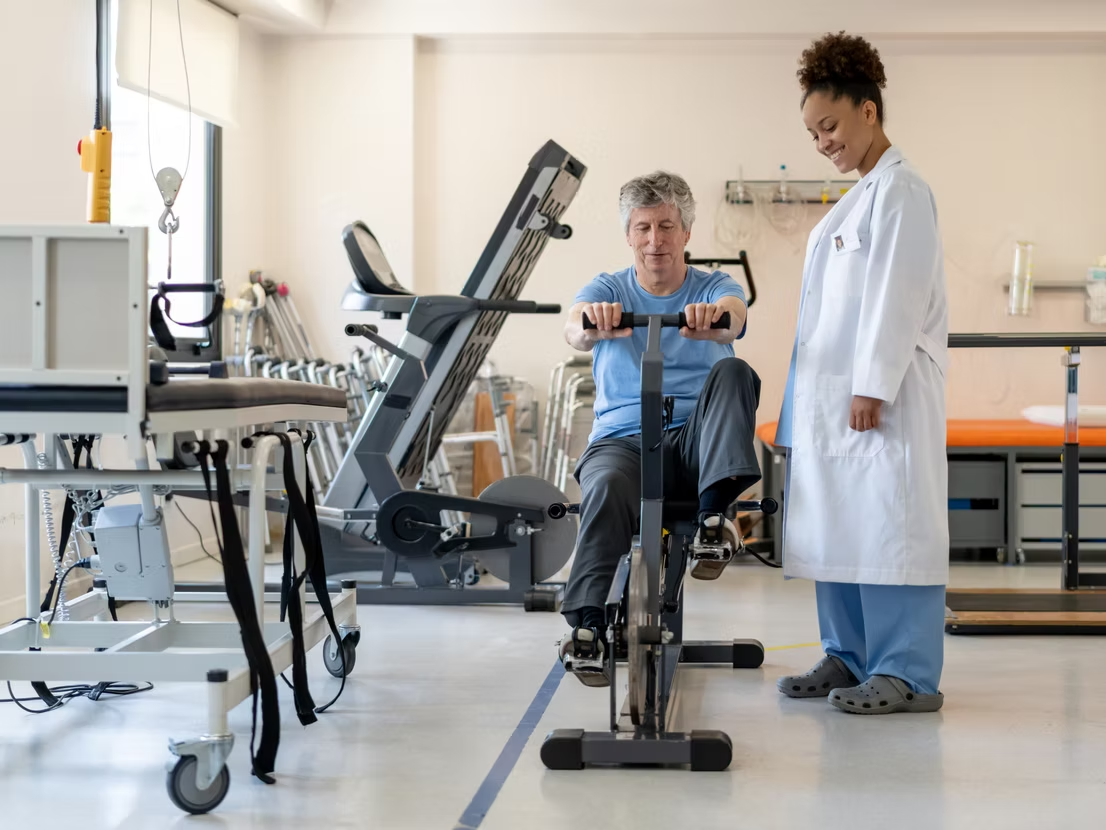
This means that after July 1, 2026, the following individuals injured in a motor vehicle accident will only be able to access coverage for medical rehabilitation benefits if they apply for accident benefits:
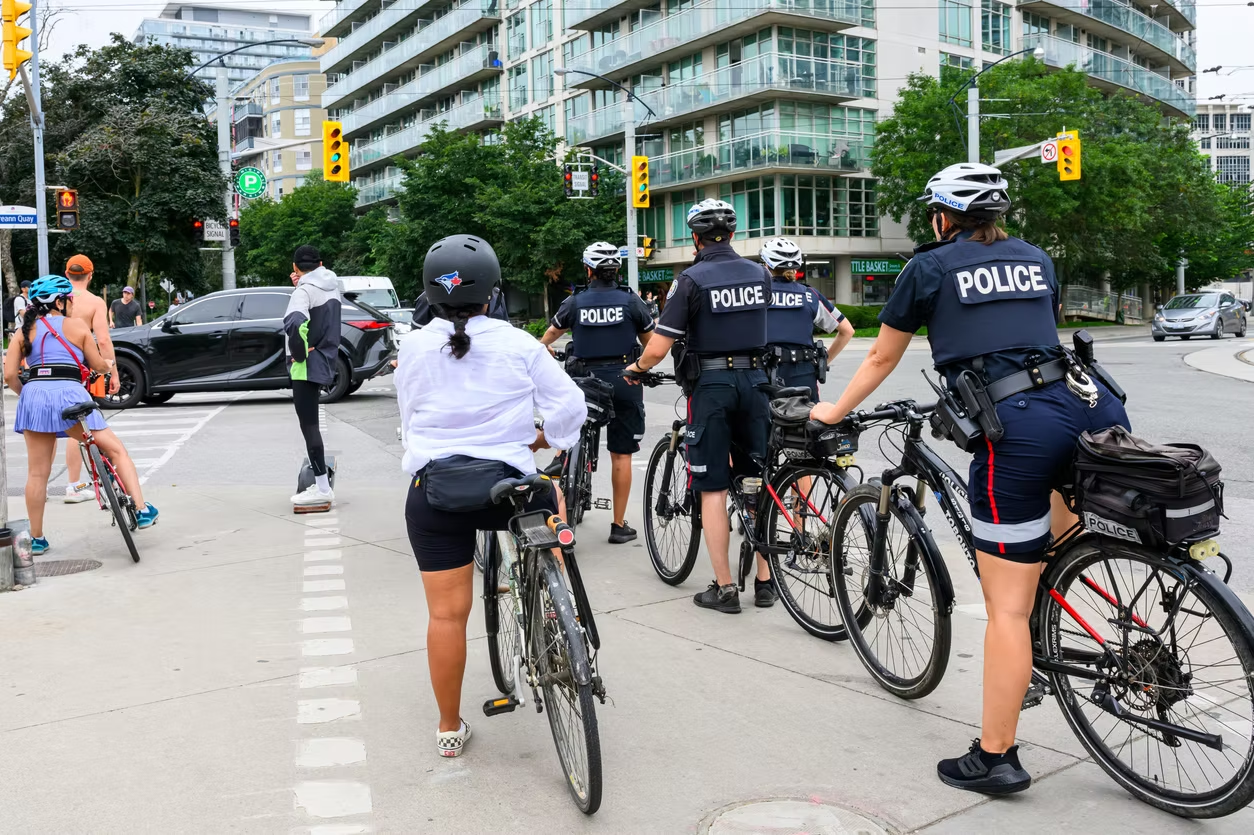
Cyclists who do not have or are not covered through an auto insurance policy.
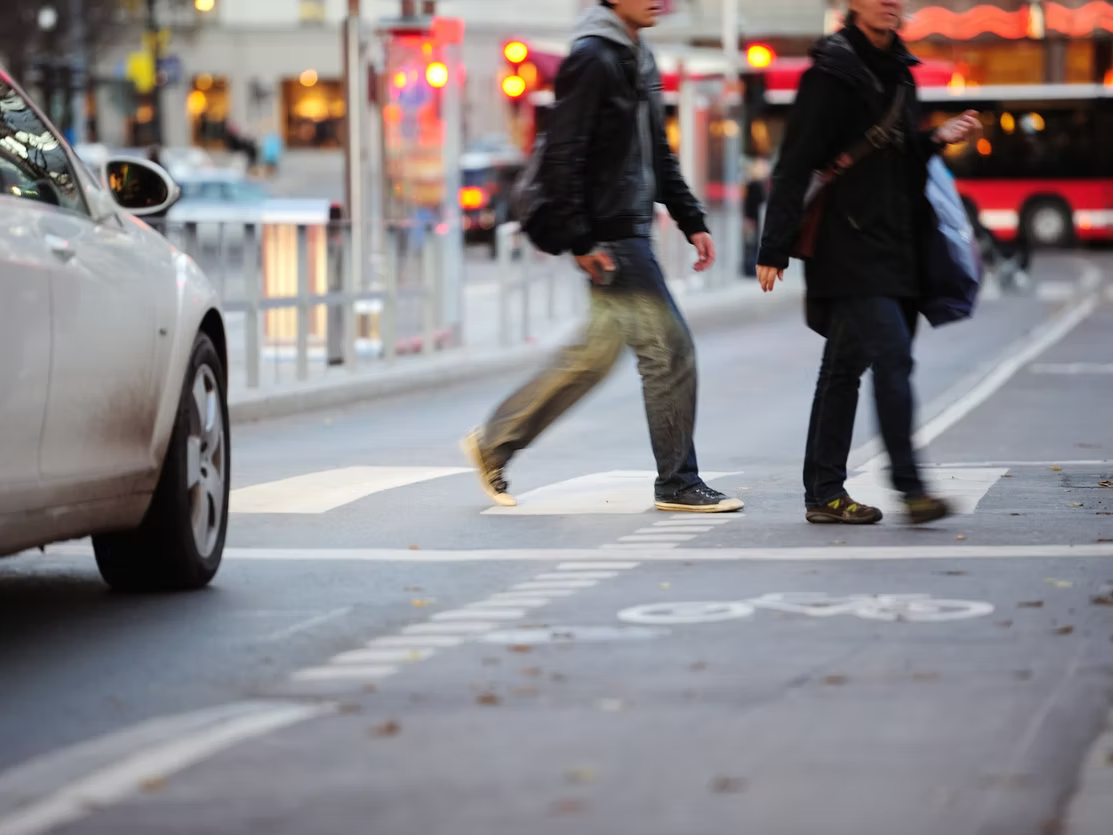
Pedestrians who do not have or are not covered through an auto insurance policy.
Family members of a policyholder that would not be defined as a dependent or a spouse at the time of the accident.
Passengers in a vehicle involved in a motor vehicle accident that do not have their own auto insurance policy or would not qualify as a dependent on the policyholder’s auto insurance policy.
IMPACT ON AUTO INSURANCE POLICIES OBTAINED PRIOR TO JULY 1, 2026
For those who already have an auto insurance policy, your policy will automatically renew to include benefits previously bundled in your coverage despite now being deemed optional along with any additional coverages previously obtained. Benefits that are now viewed as optional under the new rules can only be withdrawn or changed if you agree to the change in writing. Communications regarding your coverages should be provided directly to you by your carrier.
HOW YOUR WORK BENEFITS INTERACT WITH AUTO INSURANCE BENEFITS
Included in the upcoming changes is an alteration in how accident benefits interact with benefits that are available through an individual’s workplace.
Prior to July 1, 2026, accident benefits would only pay for approved medical treatment once there has been confirmation that an individual has exhausted or otherwise maximized all benefits that may be available through your workplace benefits carrier.
After July 1, 2026, accident benefits will have to pay for approved treatment first and then your workplace benefits can top up any gaps and/or deficits in coverage.
In theory, this appears to be a positive development that should simplify claims processing, but we know accident benefits insurers are quicker to deny treatments than work insurers. It remains to be seen how this will work in practice at the time of writing and we will continue to monitor developments in this area.
WHAT THIS MEANS FOR INJURED INDIVIDUALS IN ONTARIO
These changes will drastically alter how individuals and their families navigate the recovery process following an accident.
For those with a policy of auto insurance or looking to obtain a policy in the near future, it is critical that you are fully informed by an insurance broker or insurance representative about what is contained in your policy, what optional benefits are being purchased and what is being excluded. This will help to avoid a situation where you or your family inadvertently miss out on benefits that would otherwise provide essential financial support.
The cost of living for Ontarians has never been higher and we understand the temptation to find and purchase the lowest rate available, but the possible savings obtained from forgoing optional benefits do not come anywhere close to the losses that may be sustained if you or your family are injured in a motor vehicle accident.
We will be publishing a more fulsome article on the full scale of the impact on cyclists shortly. However, the main takeaway is that the financial pressures following an accident will grow with these changes. This is an absolute gut punch for many of our clients and cyclists across the province, who are frequently injured through no fault of their own.
In making these changes to appease private insurers that already earn billions in revenue per year, Ontario has chosen to leave Ontarians behind. Greater demands will be placed on other forms of government assistance, such as EI or ODSP. Some forms of compensation previously addressed by accident benefits will now have to be addressed through civil claims in Ontario’s court system, a system that moves much slower than accident benefits and is already plagued by delays due to inadequate funding.
Our team at The Biking Lawyer LLP are experts on the topic of accident benefits and personal injury litigation. If you or someone you know is injured in a motor vehicle accident, do not hesitate to contact us at 1-800-725-0754 or by email at info@thebikinglawyer.ca to schedule a free consultation.